
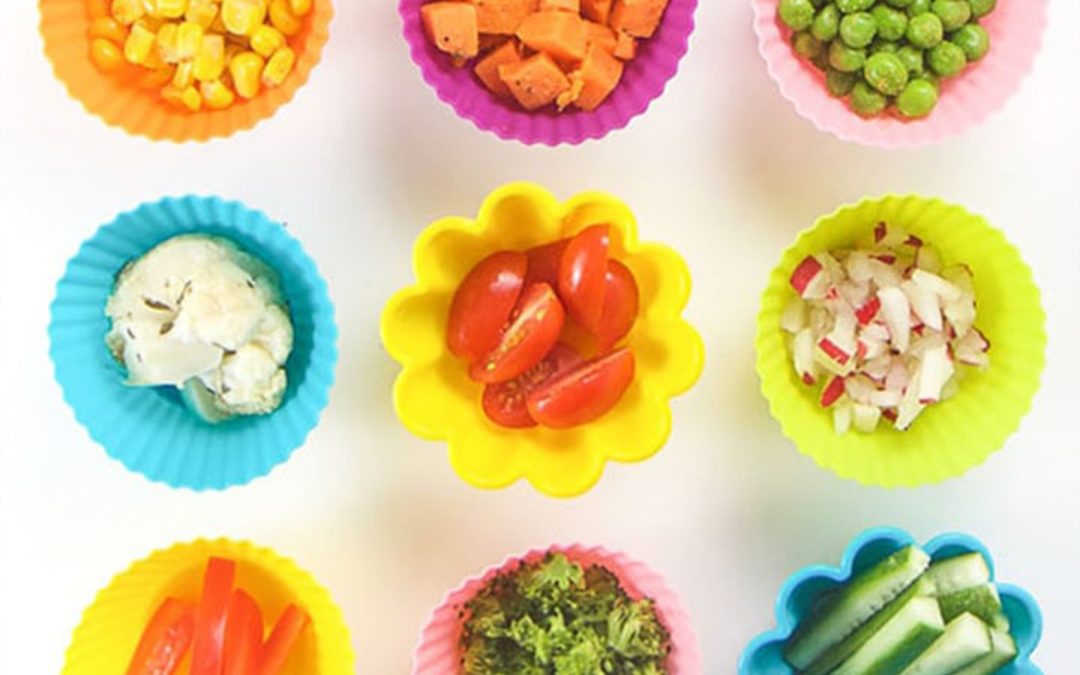
Introducing your baby to new foods can feel like a big responsibility, but the good news is it really is a lot easier than you might think. Deciding which foods to put in front of your child and how to combine them draws a great deal on the flavour combinations we enjoy as adults, and thankfully the techniques needed to get the food on the table are equally as simple.
Remember this is meant to be fun and will be messy, so don’t be nervous.
When to Start….
Until 6 months of age milk feeds are a priority and solids are a supplement. After this solid feeds become more important and should be offered before milk feeds. Watch out for signs of readiness between 4-6 months. These include- showing interest/grabbing at your food, more frequent night waking due to hunger or decreasing periods between day feeds due to hunger.
Do expect milk intake to decrease as food volume increases. If your baby doesn’t want to eat one day think about why this could be – are they teething, tired, unwell, full up from big milk feeds? Always respect your baby’s appetite and don’t push them – they’ll probably be back on their food the following day.
Each baby is different so there are no set rules and certainly not one right way of approaching introducing solids. This is merely a guideline until you find your feet.
Nutrition is important so keep these three principles in mind:
- Choose foods as close to nature as possible – so minimal processing, additives or added ingredients. Pretend you are living off the land – what would you have access to and use these as starter foods.
- Choose seasonal fruits and vegetables, whole grains as unrefined as possible
- Don’t be afraid of protein foods like eggs, groundnuts, fish and other animal meats. Early exposure (between 5-7 months of age) to these protein-rich foods can actually decrease the risk of allergy to these foods.
Weaning begins with single fruit or vegetable purées. When you do introduce them, do so one at a time and in small amounts so that you can notice and pinpoint any adverse reactions. Firstly try foods you know your baby is fine with, then leave three days before you try the next new food. Gradually introducing foods in this way makes it easier to identify adverse reactions.
Start in the morning when your baby is not tired and grumpy preferably after the first nap of the day. Start by offering 1 to 3 teaspoons of vegetable or fruit and increase the volume per meal, if the baby finishes it. Appetites vary considerably from meal to meal and to other babies, so be careful not to compare with the next child or try to force your baby to eat more/finish the meal.
Let your baby play with their food and generally explore what they’re eating. A lot more may come out than goes in but this is all part of the process. They may reject certain flavours initially but babies may need to try foods over and over again before they accept them, so don’t be disheartened. You’re laying the groundwork for a broad palate later on.
Once your little one has got the hang of eating some solids you can start to get more creative. Think about flavour combinations often found in soups or simple comfort food dishes. You can start to add meat and fish as well as eggs and dairy as long as there are no allergy issues. Speak to your Health Practitioner if you’re concerned about any food allergy.
Even if you’re not hungry, or in a rush, always try to sit and eat something with your baby at each meal as they learn from what they see. You don’t have to eat a lot, and it doesn’t have to be the same food – though research shows the same colour food as theirs can be helpful!
Try to resist keeping little hands away from the bowl as your baby will love to explore the food through touching and playing with it (as messy as it may be!)
Offer finger foods alongside spoon-fed meals wherever possible, as self-feeding will help develop your baby’s dexterity/ fine motor skills, as well as the muscles they need for chewing. Get your baby used to the idea of a cup from six months by letting them play with it outside of mealtimes – when it is empty!
When spoon-feeding your baby have two spoons to hand – one for baby and one for you. Let them practice feeding themselves, and whilst they are having a go with their spoon be ready to load up the next, then swap!
It’s very normal for babies to refuse foods that they have enjoyed eating before. This can be extremely frustrating but whatever you do don’t give up trying – keep on offering refused foods as the repeated exposure will pay off eventually.
We all belong to a culture and our own households have a culture. Culture determines many things and especially when it comes to food preferences. It might be the way food is chosen and prepared. The way food is eaten and what foods are avoided all have an influence from culture. Food preference also plays a role. So introducing your baby to solids is a delicate dance between cultural norms, personal choices and good nutrition.
Most importantly – RELAX…
Sharing food is one of life’s pleasures. Join your baby in their new adventures with food. Try not to worry too much what or how much actually goes into their mouth. Experiment with combinations – some work better than others, but there is no right or wrong as they all offer different flavours and nutrients. If you give them plenty of choice and variety, the rest will take care of itself, sometimes sooner, sometimes later. Ultimately, you’re preparing your baby to eat with you throughout their childhood and to be comfortable and confident to explore the world of food for themselves. This is just the beginning.
If you’re finding it stressful have a look at these great resources
Food Sense- Kath Megaw
Quick and easy weaning- Anabek Karmel
Raising superheroes- Jonno Proudfoot
Websites with wonderful resources- nutripaeds, umatie, ohbabyco